My Day Is 24.5 Hours Long: On the Body Clock and Non-24
My sleep is all over the place. When it’s time for bed, I’m wide awake. And after less than seven hours, I can’t drag myself up. I’ve thrown everything at it: light therapy, cutting out screens, exercise, meditation, over-the-counter pills. I wanted to fix my schedule. Nothing worked.
So is my body clock broken? After digging into the research, here’s what I found.
My body clock doesn’t run on 24 hours. It runs on 24.5.
Which means that if I just let my body do its thing, I fall asleep about half an hour later every day. Roughly every 48 days, my schedule laps the entire planet: day flips to night, night flips back to day, around and around, with no real beginning and no end.
Is the body clock even real?
Let’s start with the most basic question. Is there really a clock inside you? Do you sleep because you’re tired, or because something is keeping time?
Decades ago, researchers sealed volunteers inside underground bunkers with no light, no clocks, and no contact with the outside world, and left them there for weeks. Even with zero cues about the time of day, people kept falling asleep and waking up on a steady rhythm. Something inside us keeps time on its own, no external prompts needed.
That clock lives deep in the brain, in a tiny cluster of neurons in the hypothalamus called the suprachiasmatic nucleus (SCN). It’s the body’s conductor, running a whole system known as the circadian rhythm. Your temperature, hormones, metabolism, alertness: all of it rises and falls to its beat.
So how does the clock actually keep time?
In the 1980s, three scientists, Jeffrey Hall, Michael Rosbash, and Michael Young, found the engine of the body clock in something tiny: the fruit fly. And here’s the surprising part. The engine isn’t in the brain at all. It’s inside every single cell. Nearly every cell in your body carries its own little clock.

The mechanism is easiest to picture as a factory that shuts itself down.
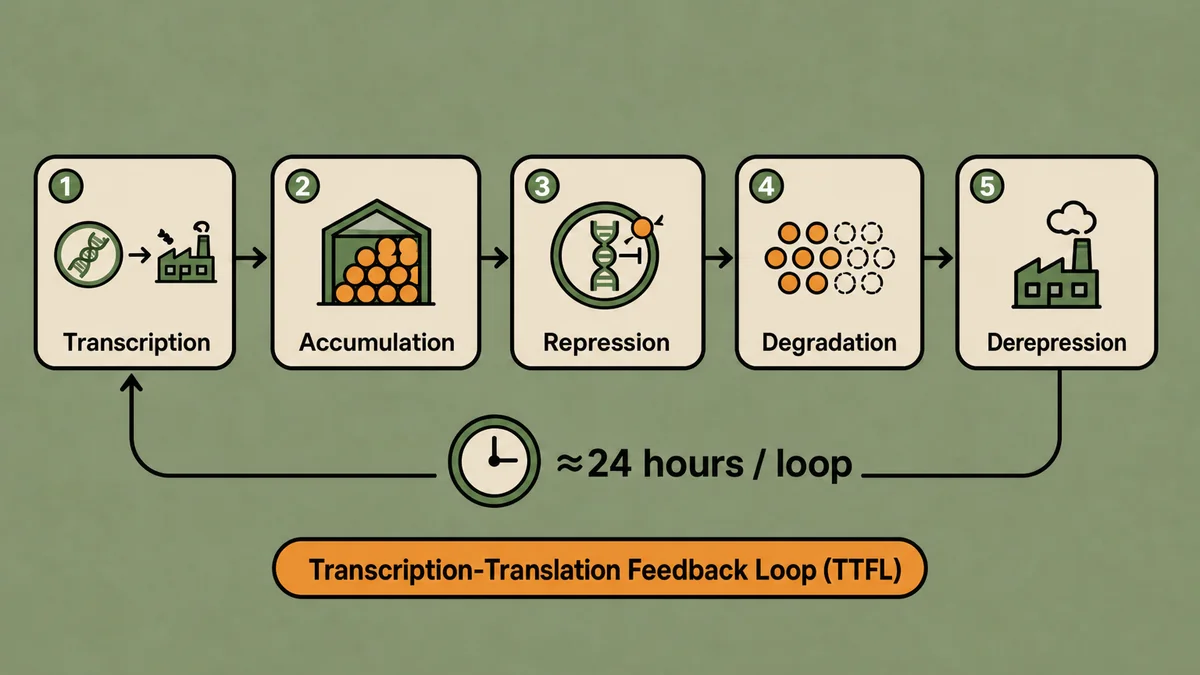
Imagine a tiny factory inside a cell, cranking out a product called PER protein, day and night.
- Clock in: A gene called period gives the order, and the factory starts producing PER protein.
- Stockpiling: PER piles up inside the cell, more and more, over the better part of a day.
- Self-shutdown: Once enough PER has accumulated, it heads back into the nucleus and switches off the very gene that started production, like a warehouse so full it hits its own stop button.
- Clearing out: With no new orders, production halts, the old PER slowly breaks down, and the shelves empty.
- Clock back in: Now that the warehouse is bare, the stop button releases, the gene fires up again, and the factory starts over.
One full loop, transcription → accumulation → repression → degradation → derepression, takes almost exactly 24 hours. That’s a single tick of the body clock.
Scientists call this the transcription-translation feedback loop (TTFL). It’s just the self-braking factory above: a protein that, once abundant enough, suppresses its own production. That slow rise and fall is how a cell counts out a day.
Michael Young found two more players that sharpen the clock. One is TIM protein (Timeless), which helps PER slip into the nucleus at night to hit the stop button. The other is DBT (Doubletime), which slows PER’s buildup by degrading the protein, and it’s that braking that tunes the whole loop to nearly 24 hours instead of racing through in a dozen.
Every cell holds one of these self-braking PER factories, and the SCN in the brain is the conductor keeping them all in step. Exactly how long each loop runs is, to a large degree, written into your genes.
So yes, the body clock is real. It isn’t a figment.
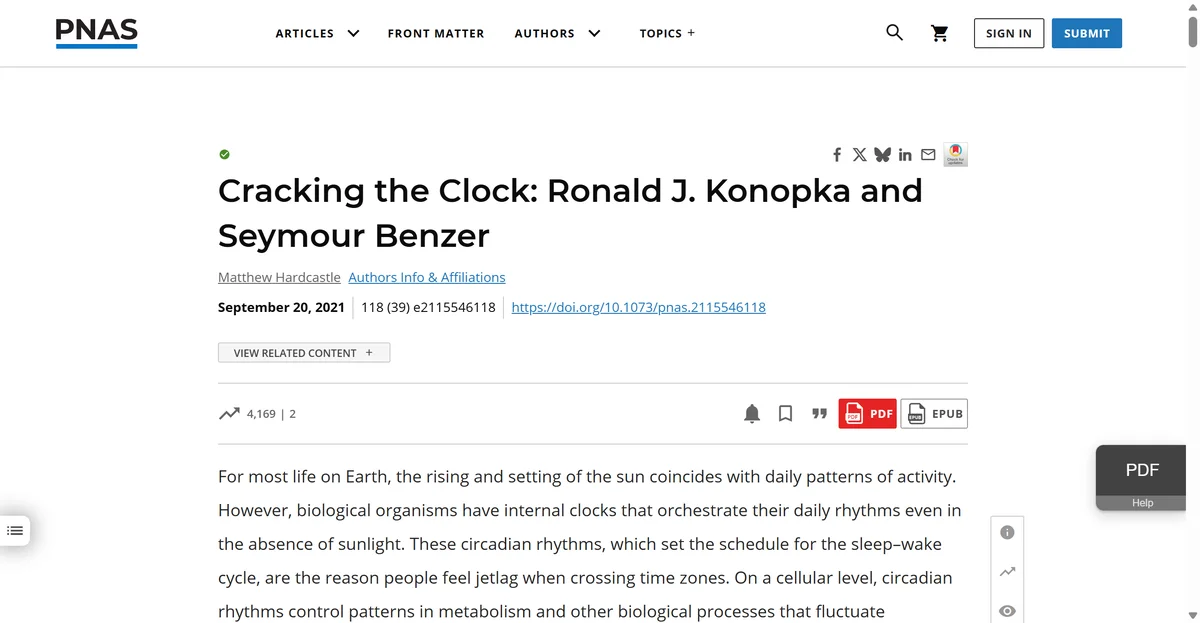
None of this came together overnight. Back in 1971, Konopka and Benzer spotted fruit flies with broken clocks. In 1984, the Hall, Rosbash, and Young labs cloned the crucial period gene, almost simultaneously. Then across the 1990s they pieced together the feedback loop above (Young found the timeless gene in 1994). The whole body of work won the 2017 Nobel Prize in Physiology or Medicine.

That said, the clock proteins aren’t quite identical in fruit flies and mammals. In the fly, PER keeps piling up and then rides into the nucleus together with TIM (Timeless), a key that has the clearance to shut the production line down. In human cells, PER instead pairs with CRY (a key) to slip into the nucleus, and it’s CRY that holds the authority to switch production off.
And if any single link in this chain breaks, the body clock stops keeping proper time.
Almost nobody’s clock runs on exactly 24 hours
Here’s a number most people don’t know.
If you cut someone off from every external time cue, how long does their day stretch to?
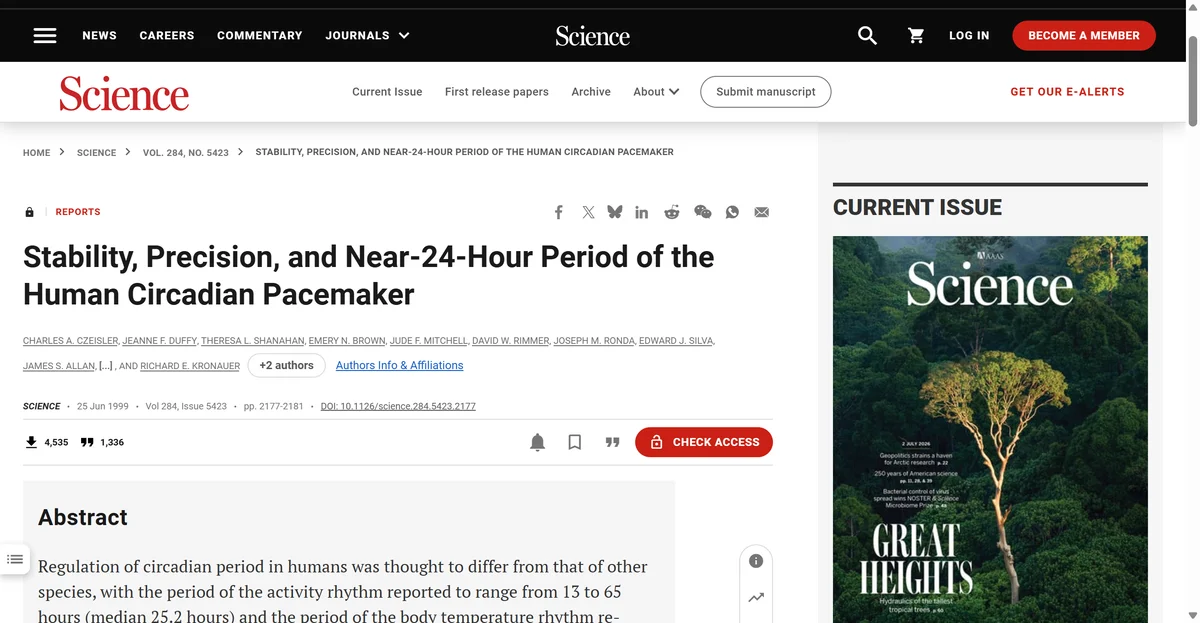
About 24.2 hours. A hair over 24. Which means nearly everyone is born with a body clock that runs a little slower than the planet.
So why do most people still keep a steady schedule, while someone like me can’t? The answer is light.
Your retina has a special class of cells (ipRGCs) that don’t do vision at all. Their only job is to tell the SCN whether there’s light right now. This process is called entrainment. Morning light nudges that slow-running clock forward a touch and resets it to 24 hours. That’s how everyone else erases their extra dozen minutes, every single day.
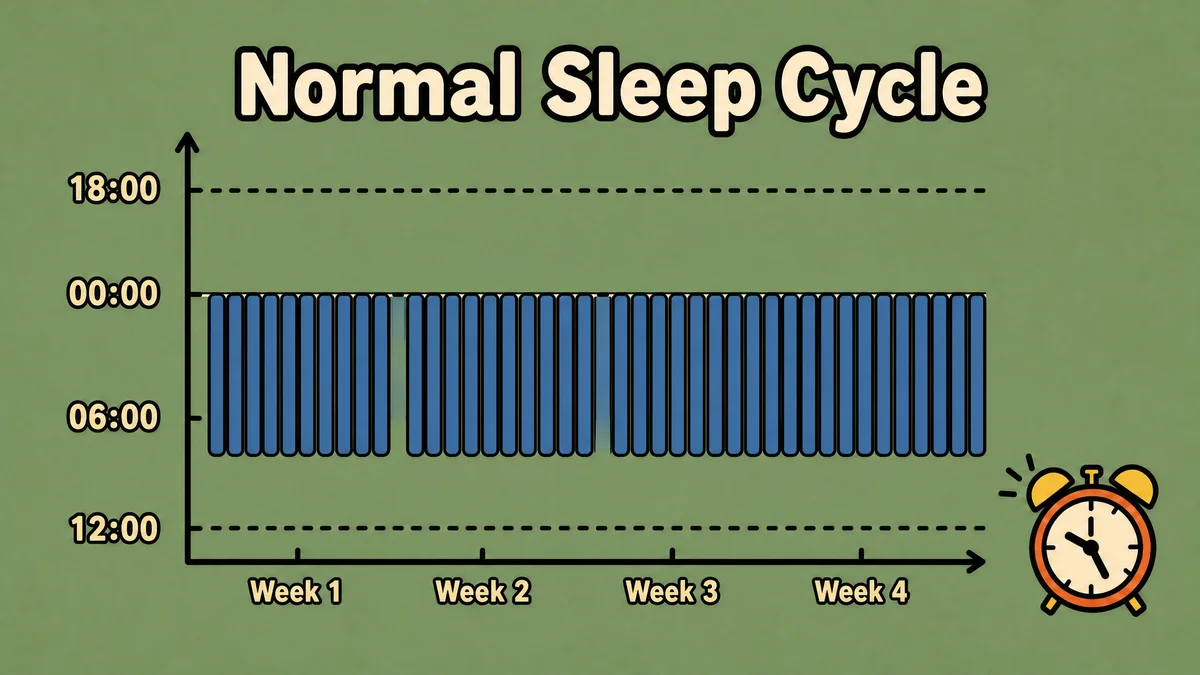
And when this daily light-resetting mechanism breaks down in a small number of people, it shows up as the two sleep disorders we’re about to get into.
DSPD and Non-24
There are two fairly common sleep disorders here. One is DSPD (Delayed Sleep Phase Disorder), the other is Non-24 (Non-24-Hour Sleep-Wake Disorder).
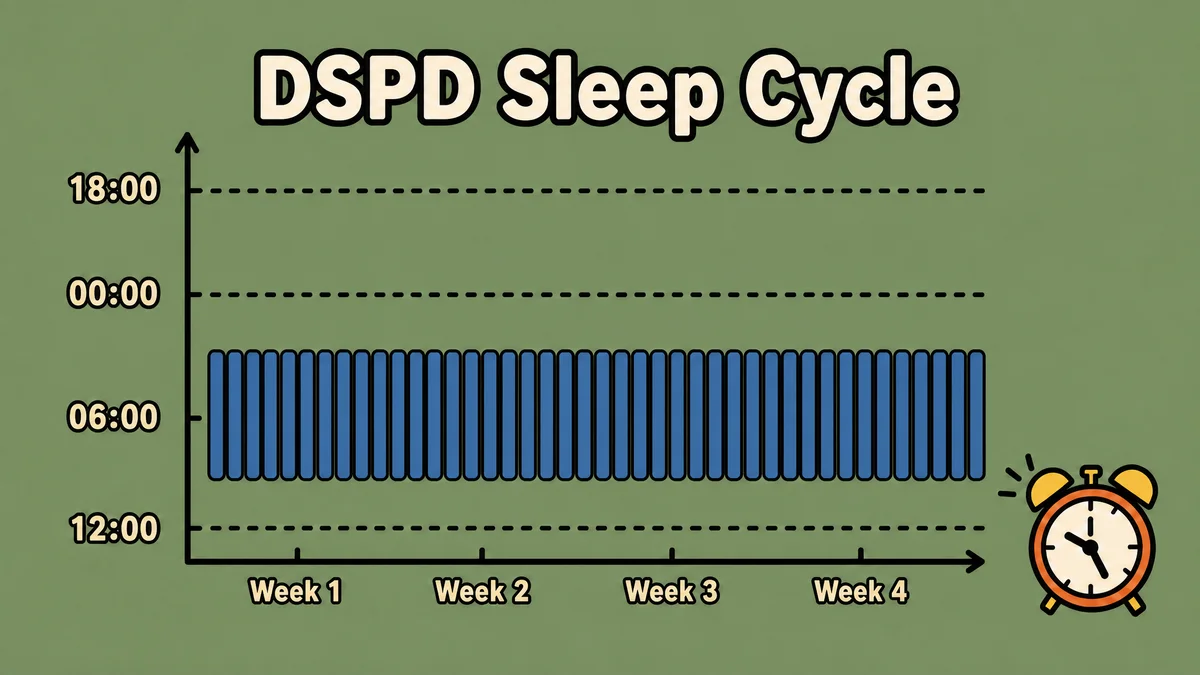
DSPD is a chronic circadian rhythm disorder in which the body clock is shifted markedly later than usual. People with it typically can’t fall asleep before 2 a.m., and being forced up early is genuinely painful, yet on their own natural schedule their sleep quality is perfectly normal.
Put plainly: with DSPD you can’t fall asleep until two or three in the morning, but once you do, you sleep just fine, get a solid 7 to 8 hours, wake up, and feel great the next day. Worth noting: recent research has found that adult ADHD and DSPD are strongly linked, and DSPD is the most common circadian disorder among people with ADHD.
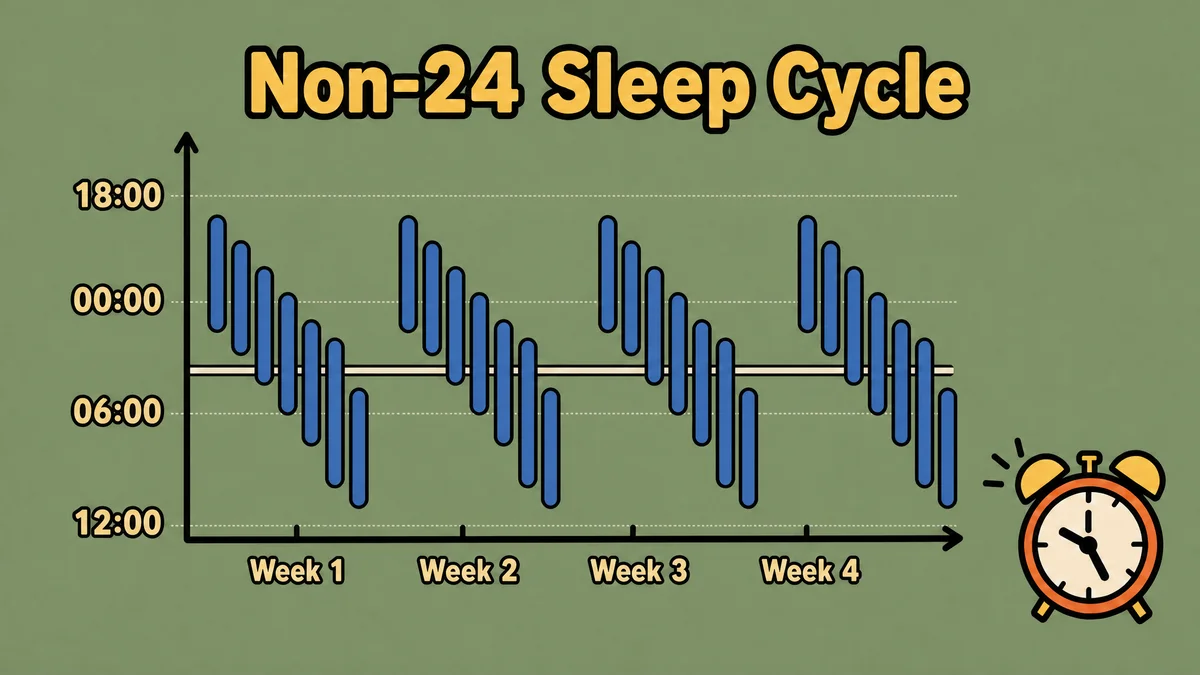
Non-24-Hour Sleep-Wake Disorder (Non-24 for short) is a rarer circadian disorder. The body clock runs longer than 24 hours (usually around 25), so bedtime and wake time slip an hour or two later every day and never lock onto a normal social schedule.
Put plainly: with Non-24, your sleep starts later than the day before, and later again, and it keeps sliding until day and night flip entirely, then keeps going, coming full circle. There’s no start and no end. It just loops.
So why do some people lose the ability to be reset by light entirely? The most common reason is total blindness. The overwhelming majority of Non-24 cases occur in totally blind people (especially those with no light perception at all), because the resetting signal has to travel through the eyes. No light gets in, so the clock just drifts on its own. That said, a small number of sighted people can’t be reset by light either.
Two quick clarifications. First, DSPD and Non-24 are mutually exclusive by definition. You can only be one or the other, never both at once. Second, there’s a mirror image of DSPD called FASPS (Familial Advanced Sleep Phase Syndrome), where people get overwhelmingly sleepy absurdly early, say five or six in the evening, and wake at two or three in the morning.
How do you know which type you are?
So how do you tell which one you’ve got?
The simplest way is to keep a sleep diary for a few weeks. If you own a smartwatch, it probably logs your sleep already. Then watch what happens when you don’t force an alarm: what time do you naturally drift toward for bed and for waking, is that pattern steady, and do you feel rested or shortchanged when you get up?
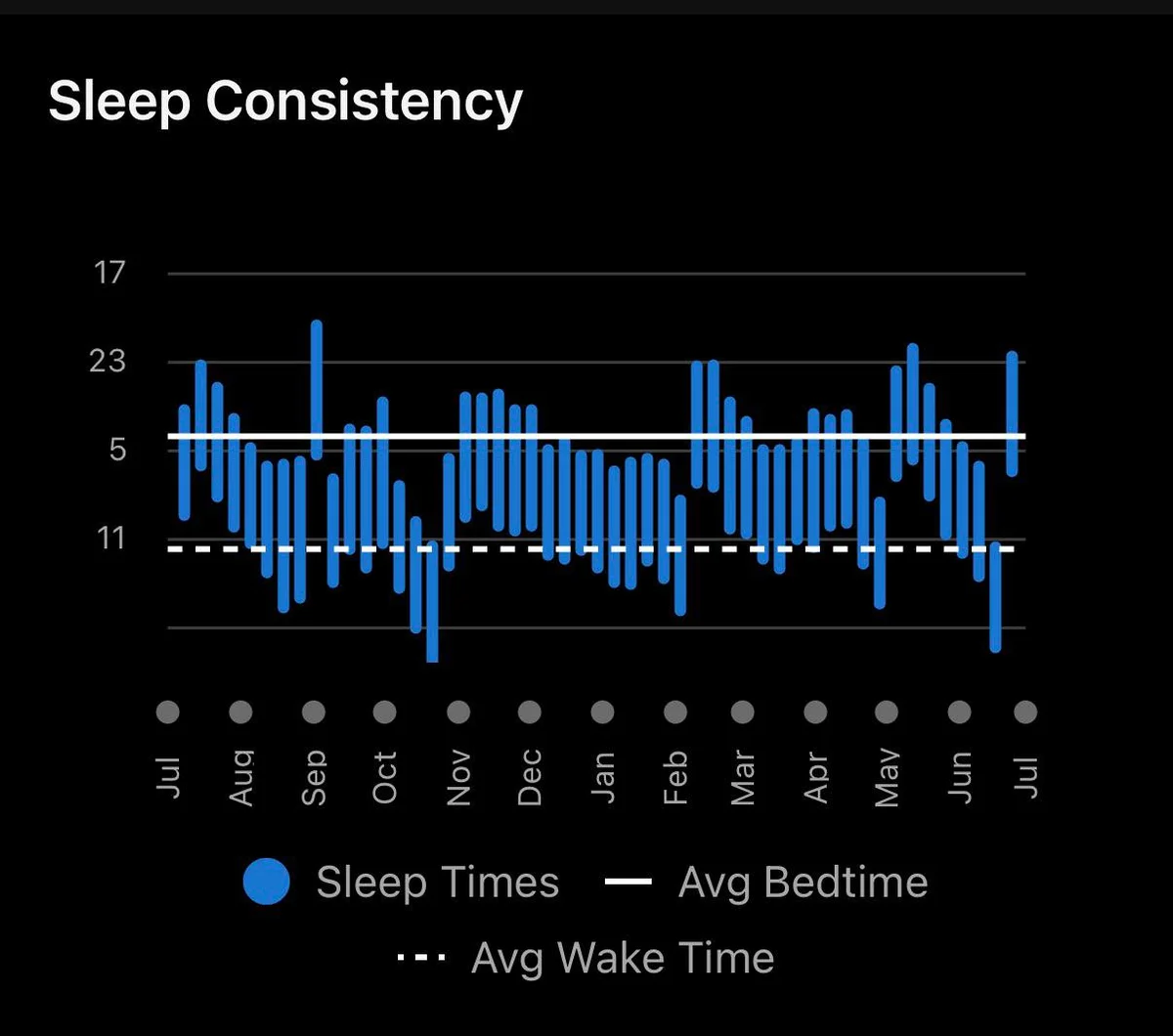
From there you can roughly place yourself. If you’re stably late, always asleep by two or three but perfectly sharp once you’ve had enough rest, that leans toward DSPD. If your bedtime creeps later every single day and keeps drifting, that’s Non-24. And if it’s the reverse, asleep and awake absurdly early, that’s FASPS. A real diagnosis, of course, still takes a proper sleep clinic.
My clock isn’t 24 hours: what I decided to do
The body clock is written into your genes. The body clock is written into your genes. The body clock is written into your genes.
Mine runs on 24.5 hours, on a 48-day loop. The moment I try to override my own biology, I can’t fall asleep, can’t get up, and end up wrecked with exhaustion, which tanks both my sleep quality and my waking productivity.
Accepting this mattered to me, because I finally stopped beating myself up. I stopped blaming myself for not sleeping on time, for not being able to wake up reliably. I started looking for ways to work with my rhythm instead of against it.
So I made my call: forget the 24-hour social clock. I’m a 24.5-hour person, and I’m going to run on my own factory settings. It’s the only state where I stay genuinely alert while awake and sleep deeply while asleep. It’s regular enough. It’s just not the same as everyone else’s.
And since your hormones and your digestion run on that same clock, honoring my natural rhythm is, for me, simply the healthier choice.
The catch is social. The whole world runs on fixed hours, nine to five, and that collides hard with DSPD and Non-24. It can leave you unproductive, forgetful, unable to focus. So plenty of people turn to medical help to sync up with the social clock: light therapy, melatonin, and Tasimelteon, a drug made specifically for Non-24.
99.999% of the world calls early-to-bed, early-to-rise, regular sleep “normal.” But my body says no. That version of “normal” brings me real physical and mental suffering. And when you can’t wake up early, people call you lazy. When you won’t go to bed early, they call you a procrastinator, undisciplined.
Here’s what I want to say: you’re not lazy, and you’re not undisciplined. You’re just wired differently. It’s time we stopped stigmatizing sleep disorders.
Wishing you all a good night’s sleep.
References
- The molecular mechanism of the body clock and the official 2017 Nobel Prize in Physiology or Medicine announcement: NobelPrize.org
- A short history of the period gene research (Konopka & Benzer’s 1971 mutants, the 1984 cloning): PNAS — Cracking the Clock, Brandeis Magazine
- The human intrinsic circadian period is about 24.18 hours: Czeisler et al., Science, 1999, Stability, Precision, and Near-24-Hour Period of the Human Circadian Pacemaker
- Adult ADHD is strongly associated with delayed sleep phase and circadian disruption: ADHD as a circadian rhythm disorder (2025), Adult ADHD and clinical correlates of DSPD
- Non-24 is highly prevalent among the totally blind; the Tasimelteon phase 3 trials (SET and RESET): Lockley et al., The Lancet, 2015, link
- Tasimelteon (Hetlioz) was approved by the FDA in January 2014, the first drug specifically for Non-24: Hetlioz FDA Approval History
Written all by heart, more than 6 hours of effort.
Cover, TTFL loop diagram, and the Normal / DSPD / Non-24 sleep-cycle charts © Philo, made with GoShipFast.