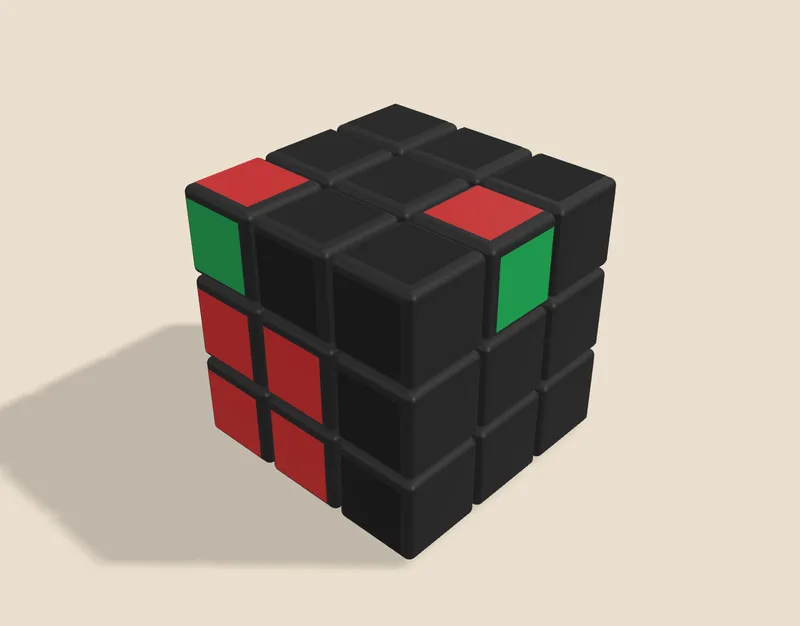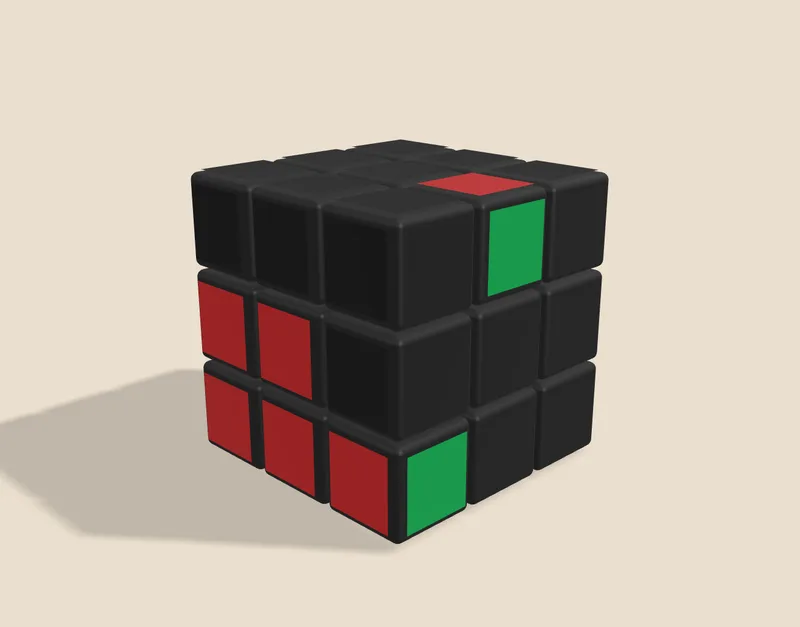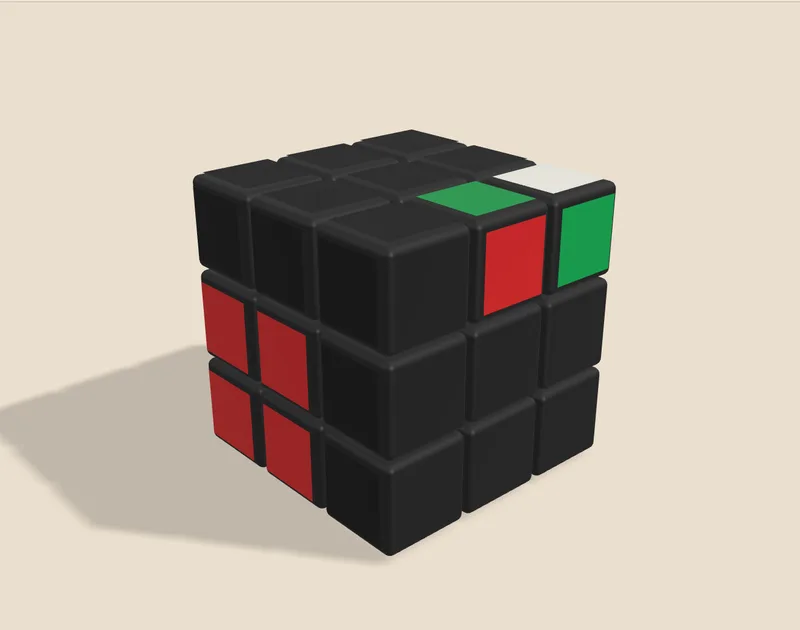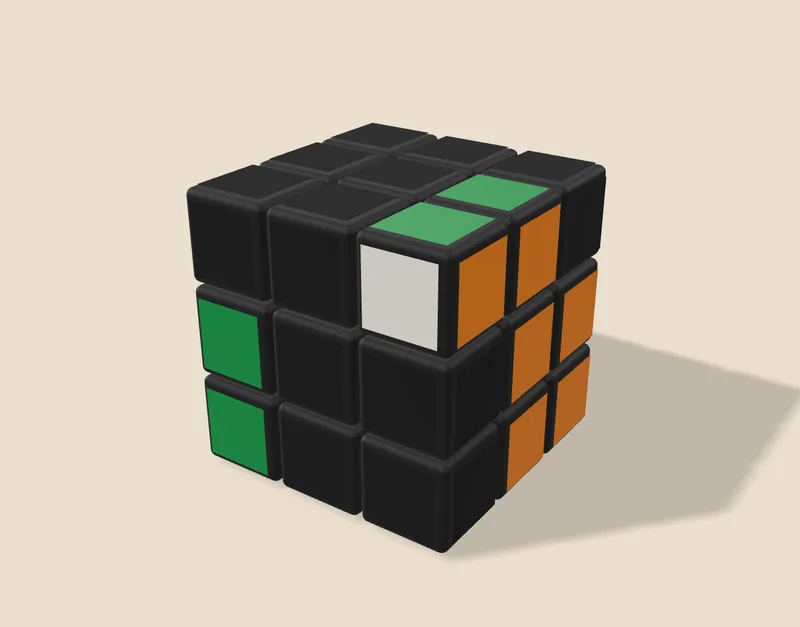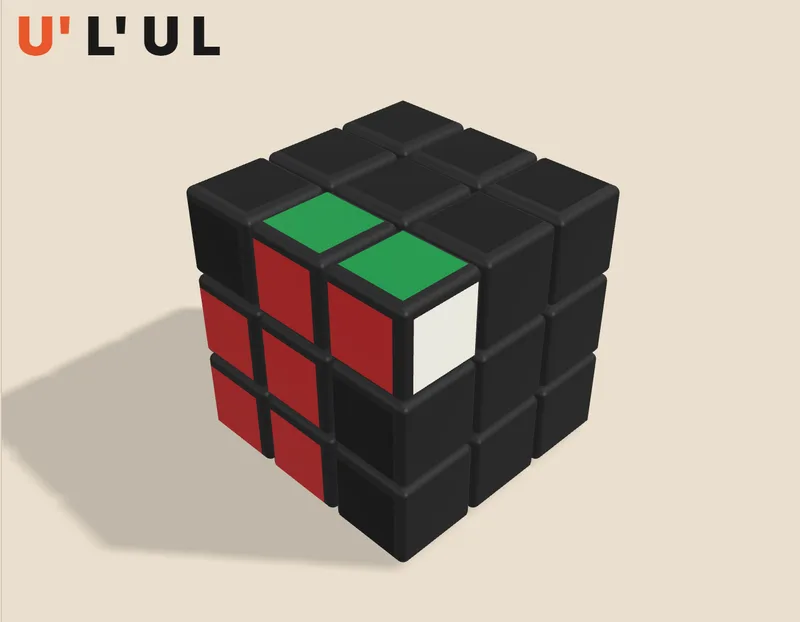
U' L' U L
Details The Roux method has four stages: build the left 1×2×3 block, build the right one, solve the top corners (CMLL), then finish the last six edges with only M and U turns (LSE).
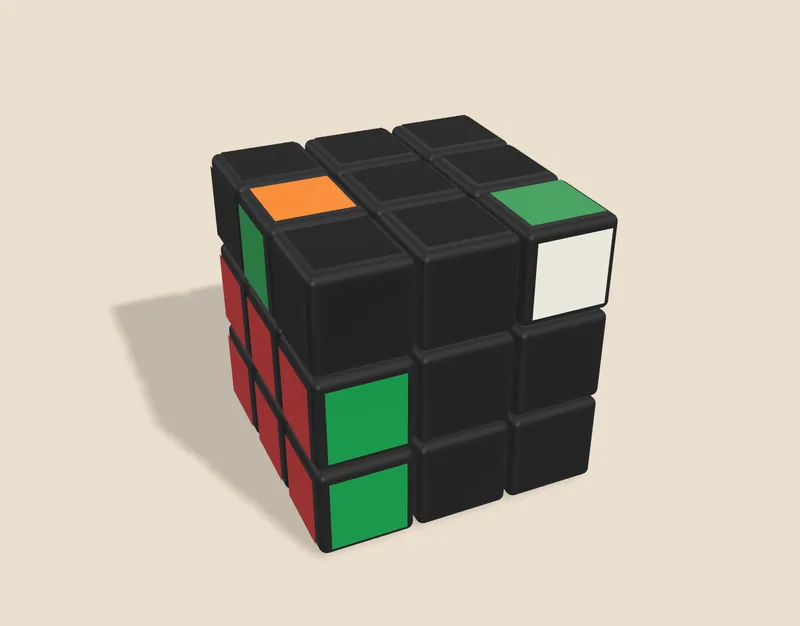
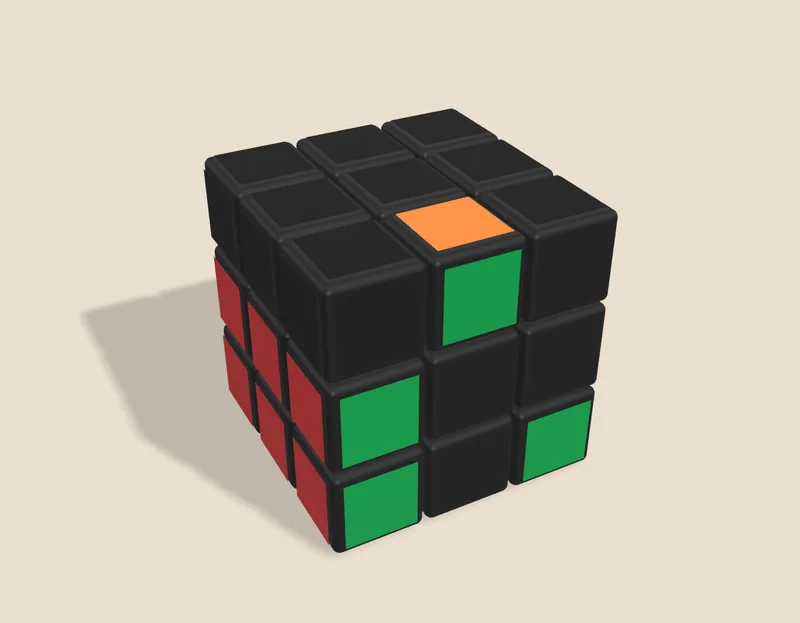
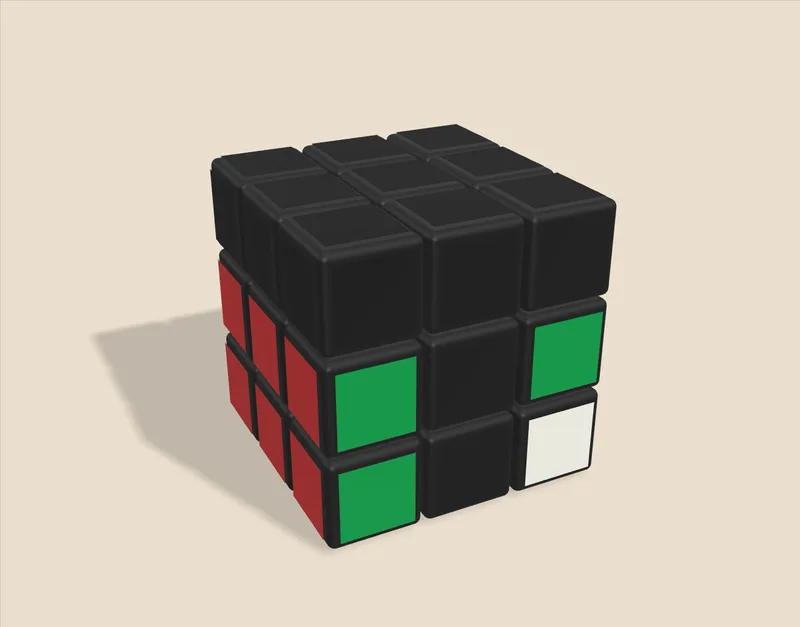
The first block is a 1×2×3 on the left: the DL edge, the two bottom-left corners and their two edges. There are no fixed algorithms — you look, pair a corner with its edge, and insert. These are the hand-moves that come up over and over. Hold the cube with the block on the left and the empty slot at the front.
The second block mirrors the first on the right — but now the left block must not move. Only R, r, M and U turns are safe. The wide r turn is the Roux trick: it moves the right layer and the M slice together, so you can grab edges from the bottom without touching the left.
If one side already matches — say both corners on one face are red — turn the top so that pair is on the left, then use the adjacent swap. If no side matches, use the diagonal swap.
Six edges remain, and only M and U turns are needed. Three steps: orient the edges so every top/bottom color faces up or down (EO), place the UL and UR edges, then finish the last four. Diagrams show the top layer's edges plus the two bottom edges DF and DB; corners are left blank because they are already solved.
A filled edge has its top/bottom color facing up or down — good. Blank means bad. Count the bad edges on top and bottom; there are only a handful of patterns and M' U M is the move that changes them.
Yellow on top, white on the bottom, red block on the left: the two edges still to place are yellow-red and yellow-orange (framed in the diagrams). Sink both to the bottom so they sit opposite each other, turn the top to line up, then M2 U or M2 U'. The centers end up flipped — the next step fixes that.